Malawi’s infrastructure governance has come under scrutiny following findings of an Infrastructure Transparency Index (ITI) 2025 that weak disclosure, limited public participation and poor enforcement are undermining value for money in the infrastructure sector.
Findings from the ITI 2025 launched on Wednesday in Lilongwe show that the country scored 25.41 percent, which is below the global average of 43.07 percent, highlighting deep structural gaps between policy intent and project-level practice.
The index, the first of its kind in Malawi, assesses transparency and accountability across the full lifecycle of public infrastructure projects, covering planning, procurement and implementation.
The index shows that Malawi has performed relatively well on the legal and institutional framework, scoring 78.2 percent, reflecting the existence of procurement laws, access to information legislation and regulatory mandates requiring disclosure of infrastructure data.
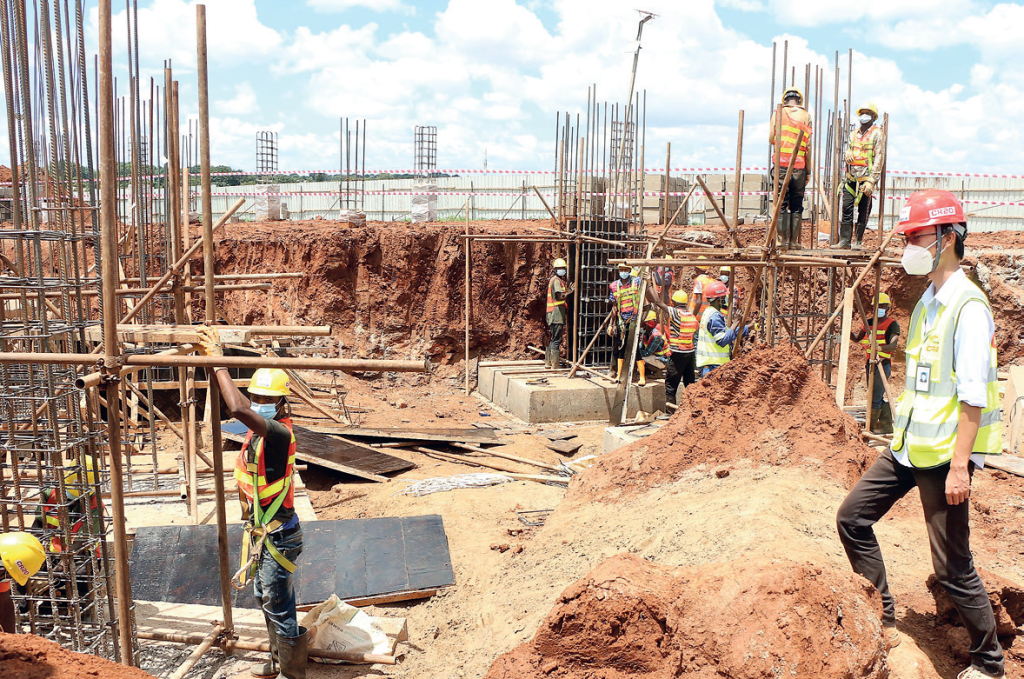
projects remains weak in Malawi. | Nation
However, these strengths are not translating into practice, as transparency at project level remains weak, with limited and inconsistent publication of key information such as project costs, contractors, timelines and variations.
Speaking during the launch Construction Industry Regulatory Authority chief executive officer Gerald Khonje said the index exposes implementation gaps rather than a policy vacuum.
He said: “This is an important study because, for the first time, we can measure how transparent the construction sector really is.
“The legal framework is strong, but enforcement and mainstreaming transparency across institutions remain major challenges.”
Khonje said recent reforms to the Public Procurement and Disposal of Assets Act require disclosure throughout project implementation, but limited awareness and capacity continue to constrain compliance.
“The index records particularly low scores for project-level disclosure and digital capacity, pointing to fragmented data systems, weak reporting standards and limited institutional ability to publish information in accessible formats,” he said.
Khonje said some non-compliance stems from limited understanding of disclosure requirements, arguing that regulators must prioritise sensitisation and capacity building alongside enforcement.
“Transparency benefits policymakers, implementers, regulators and contractors. It improves performance across the entire value chain,” he said.
One of the most concerning findings is Malawi’s performance on public participation, where the country scored just 3.72 percent.
Cost Infrastructure Transparency Initiative (CoST) Malawi chairperson Engineer Sam Bitoni said citizens are largely excluded from decision-making during the planning, procurement and implementation of infrastructure projects, a situation he described as “worrisome”.
“We have good laws, but implementing them remains the biggest problem. Without public engagement, it is difficult to achieve value for money from infrastructure investments,” he said.
Bitoni said transparency and accountability should be institutionalised and embedded in routine operations and not treated as one-off compliance exercises.
Governance expert Mavuto Bamusi linked Malawi’s poor ranking to persistent governance weaknesses in the construction sector, including allegations of corruption and weak oversight.
“The way contracts are awarded and procurement processes are managed leaves a lot to be desired,” he said, warning that low citizen and civil society participation allows small groups to capture the sector.
Bamusi linked poor transparency to low-quality infrastructure, citing roads that deteriorated shortly after construction and repeated rehabilitation of the same projects.
He described the situation as infrastructure poverty, where strong policies exist on paper, but infrastructure outcomes remain poor across transport, water, health, education and agriculture sectors.